

How Does the Safety Car Work in F1. Have you ever wondered what happens behind the scenes when the safety car comes out in a Formula 1 race? You might think it’s just a slow car leading the pack, but there’s much more to it.
Understanding how the safety car works can change the way you watch F1, making every twist and turn more exciting. You’ll discover the crucial role the safety car plays in keeping drivers safe and how it can completely shake up the race.
Ready to dive in and see the hidden strategy behind those flashing lights? Let’s go!
Role Of The Safety Car
The safety car plays a crucial role in Formula 1 racing, acting as a guardian of driver safety and race integrity. It controls the pace of the race during hazardous situations, allowing marshals and medical teams to clear the track efficiently. Understanding its role can give you new insights into how races unfold beyond just raw speed.
Purpose During The Race
The safety car is deployed to slow down the race when there’s a danger on track. This includes accidents, debris, or bad weather conditions that make racing unsafe. By bunching up the cars behind it, the safety car prevents further incidents while the track is being cleared.
It also protects the drivers and track workers. Imagine driving at 200 mph and suddenly having to dodge wreckage or injured personnel—that’s exactly what the safety car helps avoid.
When It’s Deployed
The race director calls the safety car out whenever an incident compromises safety. This can happen after a crash, during heavy rain, or if there’s a mechanical failure that leaves debris on the track. You might notice the safety car lights come on the dashboard, signaling drivers to slow down immediately.
Interestingly, the timing of deployment can drastically change the race dynamic. Have you ever wondered why sometimes the safety car appears right after a key pit stop? This can shake up the order and strategies, often catching teams off guard.
Impact On Race Strategy
The safety car can completely change how teams plan their race. When it comes out, pit stops become a tactical game-changer because cars lose less time pitting under safety car conditions. Teams often use this opportunity to refuel or change tires, hoping to gain an advantage.
Drivers also have to manage tire temperatures and stay alert despite the slower pace. If you’ve ever seen a driver push hard right after a safety car period, it’s because they’re trying to make up lost ground before the race speeds up again.
Next time you watch an F1 race, ask yourself how the safety car might be influencing the battle for position and the teams’ strategies. It’s a reminder that racing isn’t just about speed but smart decisions under pressure.

Credit: www.grixme.com
Safety Car Procedures
The safety car is a key part of Formula 1 races, designed to keep drivers safe during unexpected incidents. Understanding the safety car procedures can change how you watch a race, revealing the strategy and rules behind the scenes. These procedures ensure the race stays fair and safe for everyone involved.
Driver Instructions
When the safety car is deployed, drivers receive clear instructions over the radio. They must reduce their speed immediately and maintain their position behind the safety car. You might notice drivers bunching up, but overtaking is strictly forbidden until the safety car period ends.
Drivers also need to keep a safe distance from the car ahead to avoid accidents in slower conditions. If you’ve ever wondered why some drivers look so cautious during these laps, now you know—it’s all about safety and control.
Pit Lane Rules
The pit lane operates under special rules during a safety car period. You can enter the pits, but the speed limit is strictly enforced to prevent accidents. This is your chance to change tires or fix minor issues without losing too much time.
However, rejoining the track after a pit stop can be tricky. Drivers must be careful not to overtake the safety car or other competitors while exiting the pit lane. Have you noticed how teams time their pit stops precisely during these moments? It’s a strategic move that can make or break a race.
Restart Protocol
The restart after a safety car period is critical and demands full attention from drivers. The safety car turns off its lights to signal the lap before the restart, giving drivers a clear indication to prepare. The lead driver controls the pace but cannot slow down suddenly to block others.
Once the safety car pulls into the pits, the race resumes at full speed, and overtaking is allowed again. This moment often creates exciting battles as drivers seize the opportunity to gain positions. How would you react if you were behind the wheel during this intense restart?
Technology Behind The Safety Car
The technology behind the Safety Car in Formula 1 is crucial for race control and driver safety. It relies on advanced systems to communicate with race officials and track every car on the circuit. This technology ensures that the Safety Car can perform its role smoothly and safely during the race.
Communication Systems
The Safety Car uses high-tech radio systems to stay in constant contact with race control. This communication helps the driver receive instructions instantly. It also allows the Safety Car to relay important information to drivers on the track, ensuring everyone follows the race rules.
Tracking And Monitoring
GPS technology tracks the exact position of the Safety Car and all racing cars. Sensors monitor speed and distance to maintain proper gaps between vehicles. This data helps race control manage the race flow and react quickly to any incidents.
Safety Features
The Safety Car is equipped with special lights and signals to alert drivers. Its brakes and tires are designed for high performance and reliability. Inside, advanced safety gear protects the driver during high-speed runs and sudden stops.
Safety Car Drivers
The role of safety car drivers in Formula 1 is crucial. They manage the race pace during incidents. Their job ensures the safety of drivers and track workers. Safety car drivers must maintain control under pressure. They guide the pack safely until the track clears. The precision and skill required are immense.
Selection Criteria
Safety car drivers are chosen with care. They usually have professional racing experience. Teams look for drivers with strong track knowledge. Drivers must demonstrate excellent car control. Physical fitness is vital for long stints behind the wheel. Trustworthiness and calmness in stressful moments matter most.
Skills Required
- Exceptional driving skills at high speeds
- Ability to maintain consistent lap times
- Strong focus and quick decision-making
- Calmness under pressure and clear communication
- Understanding of race strategies and regulations
Notable Safety Car Drivers
Bernd Mayländer has been a famous safety car driver since 2000. His experience in racing makes him ideal for the role. Heinz-Harald Frentzen also served as a safety car driver. Both have a deep understanding of F1 circuits. Their presence adds confidence during race neutralizations.
Historical Moments Involving The Safety Car
The Safety Car plays a crucial role in maintaining fairness and safety in Formula 1. Over the years, it has been involved in many memorable races. These moments have made history and shaped the sport.
Memorable Deployments
One unforgettable Safety Car deployment occurred during the 2008 Singapore Grand Prix. Nelson Piquet Jr.’s crash led to the Safety Car’s appearance. This influenced the race outcome significantly. Another notable moment was the 1994 San Marino Grand Prix. The Safety Car was deployed after Ayrton Senna’s tragic accident. This event led to increased safety measures in F1.
Controversies And Debates
The Safety Car has not been free from controversy. In the 2010 Monaco Grand Prix, Michael Schumacher overtook Fernando Alonso during a Safety Car restart. This led to debates about the rules. Similarly, the 2021 Abu Dhabi Grand Prix saw heated discussions. The Safety Car’s role in the title decider became a topic of intense scrutiny.
Changes In Regulations
Over time, F1 has adjusted Safety Car regulations to enhance fairness. In 2007, new rules allowed lapped cars to un-lap themselves. This change aimed to create more competitive restarts. In 2015, the Virtual Safety Car was introduced. It aimed to reduce race interruptions while maintaining safety. These changes reflect ongoing efforts to improve the sport.
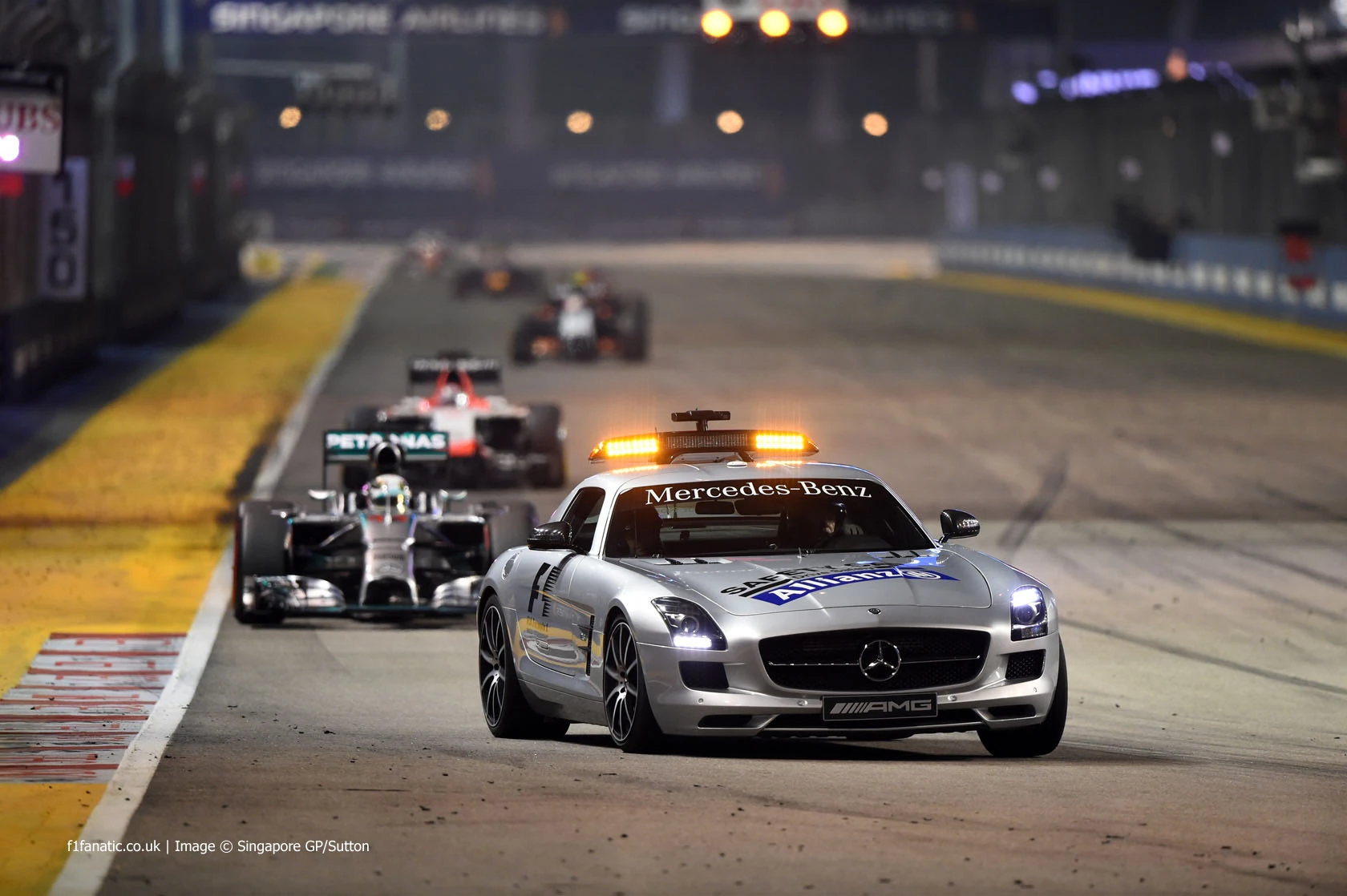
Credit: f1.fandom.com
Comparison With Virtual Safety Car
The Safety Car and the Virtual Safety Car (VSC) both serve to keep Formula 1 races safe during incidents, but they work in very different ways. Understanding these differences can give you better insight into race strategies and how drivers adjust on the fly. Let’s break down how each operates, their strengths, and when they’re most effective on the track.
Differences In Operation
The traditional Safety Car physically leads the pack at a reduced speed, bunching up the field behind it. Drivers must follow it closely, maintaining their positions and cannot overtake until it returns to the pit lane.
On the other hand, the Virtual Safety Car slows down all cars by enforcing a speed limit electronically across the entire circuit. Drivers must adhere to a delta time displayed on their dashboard, which ensures everyone reduces speed without the need for a physical car on track.
Advantages And Limitations
- Safety Car: Allows marshals to clear larger incidents safely and can regroup the field, which often affects race strategy. However, it can disrupt the flow of the race significantly and lead to bunching that changes race dynamics.
- Virtual Safety Car: Causes less disruption and maintains a better race flow since drivers slow down without needing to physically bunch up. But it’s limited to less severe incidents where track clearance can happen quickly and safely without on-track intervention.
When Each Is Used
The Safety Car is deployed during major incidents where debris or stalled cars pose a significant danger. It gives marshals time and space to safely remove hazards while controlling race pace.
The Virtual Safety Car is ideal for smaller incidents like minor crashes or localized debris. It allows the race to continue with minimal interruption, while still ensuring driver safety.
Have you ever noticed how some drivers seem to gain an advantage during these periods? Understanding the timing and conditions for each safety measure can help you appreciate the tactical moves happening behind the scenes.

Credit: www.grixme.com
Frequently Asked Questions
What Triggers The Deployment Of The F1 Safety Car?
The safety car is deployed when there’s an accident or hazardous track conditions. It slows the race to protect drivers and marshals while clearing debris.
How Does The Safety Car Control Race Pace In F1?
The safety car leads the pack at a reduced speed, preventing overtaking. This keeps drivers safe and maintains race order until the track is clear.
Can Drivers Overtake The Safety Car During The Race?
No, drivers must stay behind the safety car. Overtaking it before the race restarts is against the rules and leads to penalties.
What Happens When The Safety Car Leaves The Track?
When the safety car leaves, drivers maintain formation until the green flag signals the restart. Then, racing resumes at full speed.
Conclusion
The safety car helps keep drivers safe during accidents or bad weather. It slows the race while hazards clear from the track. Drivers follow it closely, which keeps order and prevents crashes. The safety car also helps teams plan their next moves.
Understanding how it works makes watching F1 more exciting. It shows how safety and competition balance in racing. The safety car plays a key role in every race. It keeps both drivers and fans safe and happy.