

How Do I Rotate Tires on a Front-Wheel-Drive Car. Are you wondering how to rotate tires on your front-wheel-drive car but don’t know where to start? Keeping your tires in good shape is key to driving safely and saving money in the long run.
Rotating your tires the right way helps them wear evenly, giving you better grip and extending their life. You’ll learn simple, step-by-step tips to rotate your tires like a pro—without needing fancy tools or expensive visits to the shop. Stick with me, and you’ll soon feel confident handling this easy car maintenance task yourself.
Why Rotate Tires On Front-wheel-drive Cars
Tires on front-wheel-drive cars wear unevenly due to how power and steering work. The front tires do more work than the rear ones. They handle both moving the car and turning it. This causes the front tires to wear out faster.
Rotating tires balances the wear across all four tires. It helps all tires last longer. This saves money by delaying tire replacement. It also keeps the car safe and stable on the road.
Improves Tire Lifespan
Front tires on front-wheel-drive cars wear faster. Rotating tires moves the front tires to the back. This evens out the wear. Tires last longer with regular rotation.
Enhances Vehicle Safety
Uneven tire wear affects how the car handles. Rotated tires provide better grip and stability. This improves braking and cornering control. Safer driving is the result.
Maintains Fuel Efficiency
Unevenly worn tires create more rolling resistance. The engine works harder and uses more fuel. Rotated tires reduce this resistance. This helps save on fuel costs.
Ensures Smooth Ride
Tires that wear unevenly can cause vibrations. Rotating tires balances wear patterns. The car drives smoother and feels more comfortable.
Tools Needed For Tire Rotation
Rotating the tires on your front-wheel-drive car is essential for even tire wear and prolonging their lifespan. But before you get under your vehicle, you need to gather the right tools. Having the proper equipment makes the process safer and much easier.
Jack And Jack Stands
A reliable jack is crucial to lift your car off the ground. Hydraulic floor jacks are especially helpful because they provide stable and controlled lifting. Never rely on the jack alone—always use jack stands to securely support your vehicle while you work.
Lug Wrench Or Tire Iron
You’ll need a lug wrench to loosen and tighten the lug nuts on your wheels. A cross-shaped lug wrench offers better leverage and is easier to handle than a simple tire iron. If you want to speed up the process, an impact wrench can save you effort, but it’s not mandatory.
Torque Wrench
Ensuring the lug nuts are tightened to the manufacturer’s recommended torque is vital for safety. A torque wrench lets you apply the exact amount of force needed, preventing damage to the wheel or studs. Skipping this tool can lead to over-tightening or loose wheels, which is risky.
Wheel Chocks
Never forget to use wheel chocks before lifting your car. Placing these sturdy blocks behind the wheels keeps the car from rolling unexpectedly. It’s a simple step that adds an important layer of safety.
Gloves And Protective Gear
Protect your hands with durable gloves, especially if your tires or tools are dirty or rusty. Eye protection is also a good idea to shield yourself from dust or debris. Staying safe means you can finish the job comfortably and confidently.
Do you already have some of these tools at home? Setting up a dedicated tire rotation kit can save you trips to the mechanic and give you peace of mind on the road.
Preparing Your Car For Rotation
Rotating tires on a front-wheel-drive car involves swapping the front tires with the rear ones. This promotes even wear and extends tire life. Regular rotation enhances safety and performance by maintaining balanced traction across all wheels.
Preparing your car for tire rotation is crucial for safety and efficiency. It’s not just about moving tires around. Proper preparation ensures everything goes smoothly. Follow these steps to get your car ready for rotation.
Park On A Level Surface
Find a flat area to park your car. A level surface keeps the car stable during the process. Avoid slopes or uneven ground. This helps prevent any accidents or car movement.
Engage Parking Brake
Set the parking brake firmly. This is vital for safety. It keeps the car from rolling while you work. Make sure the brake is fully engaged. Double-check for peace of mind.
Loosen Lug Nuts
Loosen the lug nuts before lifting the car. Use a wrench to turn each nut counterclockwise. Do not remove them yet. This makes it easier when the tire is off the ground. Remember, just loosen, not remove.
Credit: www.autoblog.com
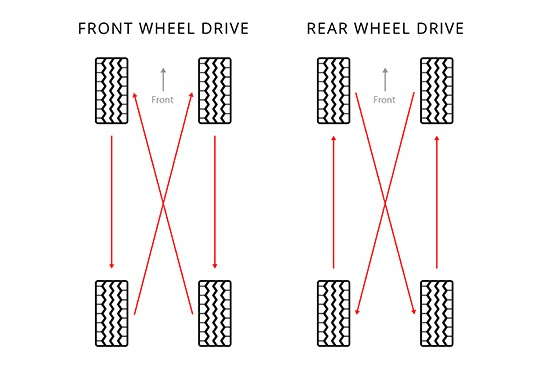
Tire Rotation Patterns For Front-wheel-drive
Understanding the right tire rotation pattern for your front-wheel-drive car is key to extending tire life and maintaining safe handling. Different patterns can affect how evenly your tires wear, and choosing the right one depends on your vehicle and tire type. Let’s look at two common rotation patterns that work well with front-wheel-drive cars.
Forward Cross Pattern
The Forward Cross pattern is a popular choice for front-wheel-drive vehicles. In this pattern, the front tires move straight back to the rear, while the rear tires cross to the opposite front positions.
- Left front tire goes to left rear
- Right front tire goes to right rear
- Left rear tire moves to right front
- Right rear tire moves to left front
This pattern helps balance wear because the front tires, which do most of the steering and power delivery, get moved back while the rear tires take a turn at the front. I once noticed my steering felt smoother after using this rotation, which made me realize how much even wear matters for driving comfort. Have you ever felt your car pulling to one side? Uneven tire wear could be the reason.
X-pattern
The X-Pattern is another effective way to rotate tires on a front-wheel-drive car. Here, all tires switch positions diagonally.
- Left front tire moves to right rear
- Right front tire moves to left rear
- Left rear tire moves to right front
- Right rear tire moves to left front
This pattern ensures all tires experience front and rear wear and both left and right side wear. If you want to maximize tire life and even out tread wear, this method is worth considering. It’s a bit more involved than the Forward Cross but can be very effective, especially if your tires are non-directional. Have you checked if your tires are directional? It changes which patterns you can safely use.
Step-by-step Tire Rotation Process
Rotating tires on a front-wheel-drive car helps even out tire wear. It improves traction and extends tire life. Follow this step-by-step process to rotate your tires safely and correctly.
Lift The Car Safely
Park the car on a flat, stable surface. Engage the parking brake. Place wheel chocks behind the rear tires. Use a reliable jack to lift the front of the car. Secure the car with jack stands for safety. Never rely only on the jack to hold the car up.
Remove Tires
Loosen the lug nuts on the front tires with a lug wrench. Remove the lug nuts completely. Carefully take off the front tires and set them aside. Repeat the process for the rear tires. Keep lug nuts in a safe place to avoid losing them.
Swap Tires According To Pattern
Move the front tires straight to the rear on the same side. Move the rear tires to the front but switch sides. For example, rear left goes to front right, rear right goes to front left. This cross pattern helps even out tire wear on a front-wheel-drive car.
Reinstall Tires And Tighten Lug Nuts
Place the tires back on the wheel hubs. Hand-tighten the lug nuts first to keep the tires secure. Lower the car carefully off the jack stands. Use a torque wrench to tighten the lug nuts to the manufacturer’s recommended torque. Tighten nuts in a star pattern for even pressure.
Checking Tire Balance And Pressure
Checking tire balance and pressure is essential before rotating tires on a front-wheel-drive car. Balanced tires help your vehicle run smoothly and last longer. Proper pressure improves fuel efficiency and safety. Neglecting these checks can cause uneven wear and poor handling.
Start by inspecting tire pressure. Use a reliable tire pressure gauge for accuracy. Check the pressure when tires are cold, ideally before driving. Refer to your car’s manual or the sticker inside the driver’s door for the correct pressure values.
Next, examine tire balance. Unbalanced tires cause vibrations at higher speeds. If you feel shaking in the steering wheel, your tires might need balancing. Most tire shops offer balancing services. Balancing distributes weight evenly across the tire and wheel.
Maintaining proper balance and pressure extends tire life. It also ensures a safer and more comfortable drive. Always check these factors before and after tire rotation.
How To Check Tire Pressure
- Remove the valve cap from the tire.
- Press the tire gauge firmly onto the valve stem.
- Read the pressure measurement on the gauge.
- Compare with the recommended pressure for your car.
- Add or release air to reach the correct pressure.
- Replace the valve cap securely.
Signs Of Tire Imbalance
- Vibration in the steering wheel at high speeds.
- Uneven tire wear patterns.
- Car pulling to one side while driving.
- Noise coming from the tires during motion.
Where To Get Tires Balanced
- Local tire shops and service centers.
- Automotive dealerships.
- Specialized wheel and tire repair shops.
- Some gas stations with tire service bays.
How Often To Rotate Tires
Knowing how often to rotate tires on your front-wheel-drive car can save you money and keep your ride smooth. Tires wear unevenly, especially on front-wheel-drive vehicles where the front tires handle most of the work. Rotating them regularly ensures even wear and extends their lifespan.
Recommended Rotation Interval
Most car manufacturers suggest rotating tires every 5,000 to 7,500 miles. This range aligns with routine oil changes, making it easier to remember. If you drive mostly on rough roads or carry heavy loads, consider rotating your tires closer to the 5,000-mile mark.
Signs You Need To Rotate Your Tires
- Uneven tread wear between front and rear tires
- Vibrations or noise while driving
- Your vehicle pulls to one side during braking
If you notice any of these signs before hitting the recommended mileage, don’t wait. Early rotation can prevent costly tire replacements and improve safety.
How Driving Habits Affect Rotation Frequency
Your driving style influences how quickly your tires wear out. Aggressive acceleration and sharp turns stress the front tires more on a front-wheel-drive car. If you often drive in stop-and-go traffic or on hilly terrain, rotating tires more frequently helps maintain balance and performance.
What Happens If You Don’t Rotate Tires Regularly?
Failing to rotate tires can lead to uneven wear, especially on the front tires of a front-wheel-drive car. This imbalance affects traction, fuel efficiency, and even suspension components. Have you ever felt your steering wheel pull unexpectedly? That might be the warning your tires need rotation.
Signs You Need Tire Rotation
Rotating tires on a front-wheel-drive car keeps them wearing evenly. Uneven wear can reduce tire life and affect safety. Knowing the signs that call for tire rotation helps you avoid costly replacements. Watch for these clear signals.
Uneven Tire Wear Patterns
One tire looks more worn than the others. This happens often on front tires in front-wheel-drive cars. Check the tread depth across each tire. If some tires wear faster, it’s time to rotate.
Vibration While Driving
Feeling shakes or vibrations in the steering wheel or car seat? This can mean tires wear unevenly or are out of balance. Rotating tires can fix this by evening out wear and balance.
Pulling To One Side
The car drifts left or right without steering input. Uneven tires cause this pulling effect. Rotating tires helps balance wear and improves straight driving.
Low Tire Tread Depth
Check tread depth with a simple tool or penny test. Tires with shallow tread need rotation to share wear. This extends the life of all tires and keeps grip strong.
Regular Mileage Intervals
Most experts advise tire rotation every 5,000 to 7,000 miles. Following this schedule prevents uneven wear before it starts. Mark the mileage and plan rotations in advance.
Common Mistakes To Avoid
Rotating tires on a front-wheel-drive car may seem straightforward, but avoiding common mistakes can save you time, money, and safety risks. Knowing what not to do helps keep your tires wearing evenly and your car running smoothly.
Many people overlook simple details that lead to uneven tire wear or even vehicle damage. Have you ever wondered why your front tires wear out faster despite regular rotation? Let’s uncover some frequent errors you should steer clear of.
Incorrect Tire Rotation Pattern
Using the wrong rotation pattern is a top mistake. Front-wheel-drive cars usually require moving the front tires straight back and crossing the rear tires to the front. Mixing up this pattern can cause uneven wear and reduce tire life.
Double-check your vehicle’s manual before starting. Are you sure you’re rotating the tires in the right order?
Neglecting Tire Pressure Checks
Rotating tires without checking and adjusting tire pressure is a missed step. Unequal pressure affects traction and accelerates wear.
Always measure and adjust pressure before and after rotation. Can you feel the difference in handling when your tires aren’t properly inflated?
Failing To Inspect Tire Condition
Skipping a tire condition check during rotation wastes a valuable inspection opportunity. Look for cuts, bulges, or uneven tread wear.
Spotting issues early can prevent blowouts or costly repairs. How often do you examine your tires beyond just rotating them?
Not Tightening Lug Nuts Properly
After rotation, loose or over-tightened lug nuts can cause safety hazards. Use a torque wrench to tighten nuts to the manufacturer’s specs.
Hand-tightening alone isn’t enough. Would you trust your car’s safety to just a quick twist by hand?
Ignoring Wheel Alignment Problems
Tire rotation won’t fix alignment issues. If your car pulls to one side or your tires wear unevenly, get your alignment checked.
Ignoring this leads to faster tire damage and poor handling. When was the last time you had your wheel alignment inspected?

Credit: www.bfgoodrichtires.com

Credit: www.facebook.com
Frequently Asked Questions
How Often Should I Rotate Tires On A Front-wheel-drive Car?
You should rotate tires every 5,000 to 7,500 miles. This helps even out tire wear and extends tire life. Check your owner’s manual for specific intervals based on your vehicle.
What Is The Best Tire Rotation Pattern For Front-wheel-drive Cars?
The recommended pattern is the forward cross. Move front tires straight back and cross rear tires to the front. This balances wear and maintains traction.
Can I Rotate Tires Myself Or Need A Professional?
You can rotate tires yourself with basic tools and knowledge. However, a professional ensures correct torque and alignment. Regular rotations improve safety and tire longevity.
Why Is Tire Rotation Important For Front-wheel-drive Vehicles?
Front tires wear faster due to steering and power delivery. Rotating them promotes even wear, improves handling, and increases tire life. It also maintains fuel efficiency.
Conclusion
Rotating tires on a front-wheel-drive car helps tires last longer. It keeps your car safe and improves driving comfort. Regular rotation balances tire wear and saves money on replacements. You only need basic tools and a little time. Follow the right pattern and check tire pressure after.
Small steps make a big difference in car care. Keep your ride smooth and safe by rotating tires often. Simple maintenance goes a long way.