
Have you ever faced the frustration of a dead lawn mower battery just when you need to get your yard work done? You might be wondering, can you jump a lawn mower battery with your car?
It sounds simple, but doing it the right way is crucial to avoid damage and get your mower running quickly. You’ll discover the safe steps to jump-start your lawn mower using your car battery, plus the important precautions you need to take.
Keep reading to save time and get your mower back in action without any hassle.
Credit: landscapeunite.com
Safety Precautions
Jumping a lawn mower battery with a car can be risky. Taking safety precautions reduces accidents and damage. Follow these steps to protect yourself and your equipment.
Wear Protective Gear
Always wear safety glasses to protect your eyes from sparks. Use gloves to avoid acid burns from the battery. Long sleeves and pants help shield your skin. Safety gear keeps you safe from unexpected accidents.
Ensure Proper Ventilation
Work in a well-ventilated area to avoid harmful gas buildup. Battery gases can be flammable and dangerous. Open doors or work outdoors to keep fresh air flowing. Good ventilation lowers the risk of explosion.
Check Battery Condition
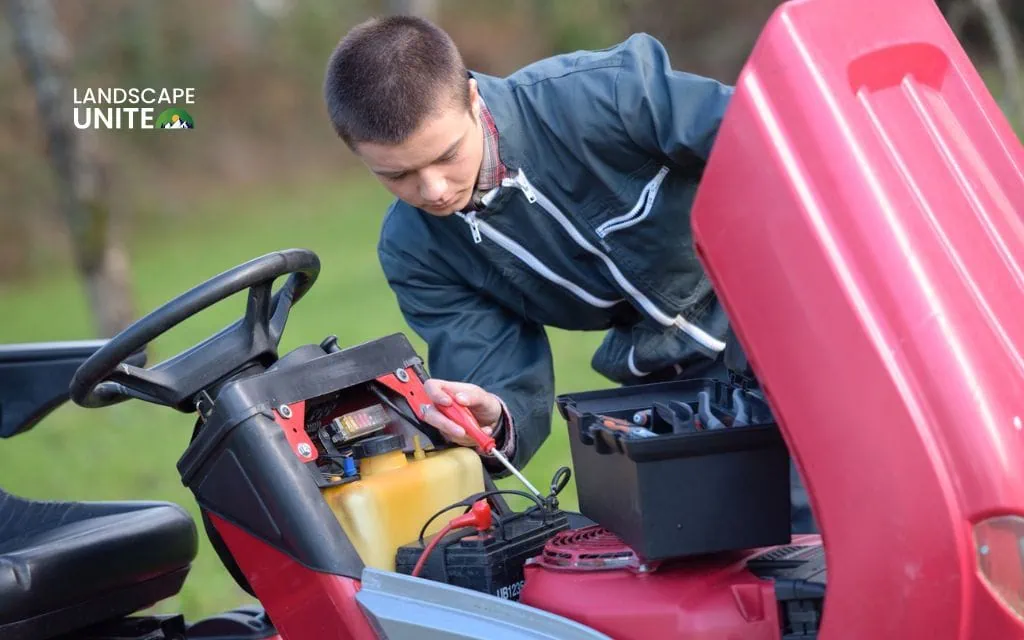
Inspect both batteries for cracks or leaks before jumping. Do not jump a damaged or frozen battery. Ensure terminals are clean and free of corrosion. A bad battery can cause sparks or fail to start.
Credit: landscapeunite.com
Tools And Materials Needed
Jump-starting a lawn mower battery using a car requires a few simple tools and materials. Having the right items ready ensures a smooth and safe process. Each tool plays an important role in transferring power from the car battery to the lawn mower battery.
Understanding what you need helps avoid mistakes and damage to the batteries or electrical systems. Below are the essential tools and materials to prepare before starting.
Jumper Cables
Jumper cables connect the car battery to the lawn mower battery. Choose cables with thick insulation and strong clamps. Longer cables give more flexibility to position the vehicles safely apart. Clean clamps help ensure good contact with the battery terminals.
Car With Charged Battery
The car must have a fully charged and working battery. This battery provides the power needed to jump-start the lawn mower. The car engine should be off before connecting cables, and the vehicle parked on a flat surface.
Lawn Mower Battery
Check the lawn mower battery for visible damage or leaks before attempting a jump. The battery terminals must be clean and free of corrosion. Knowing the battery voltage helps confirm compatibility with the car’s battery.
Preparing To Jump Start
Preparing to jump start a lawn mower battery with a car requires careful steps. Safety comes first. Taking time to set up correctly helps avoid damage or injury.
Focus on the position of both vehicles. Ensure engines are off before connecting cables. Know how to spot battery terminals clearly. These preparations make the jump start process smooth and safe.
Positioning The Vehicles
Park the car close to the lawn mower. Keep the vehicles near but not touching. This allows the jumper cables to reach both batteries easily. Turn the wheels of the car away from the mower for extra safety. Engage the parking brake on the car to prevent movement.
Turning Off Both Engines
Switch off the car engine completely. Also, turn off the lawn mower’s ignition. Remove the key from the mower if possible. This prevents any accidental starting during the jump start process. Ensure all lights and accessories are off in the car as well.
Identifying Battery Terminals
Locate the battery on both the car and the lawn mower. Look for the positive terminal marked with a plus sign (+) or red color. Find the negative terminal marked with a minus sign (−) or black color. Clean any dirt or corrosion from the terminals. Good contact is essential for a successful jump start.
Step-by-step Jump Start Process
Jump-starting a lawn mower battery using a car is a straightforward process. It requires careful handling of cables and a clear sequence of actions. This step-by-step guide ensures safety and effectiveness. Follow each step closely to avoid damage and achieve the best results.
Connecting Positive Cables
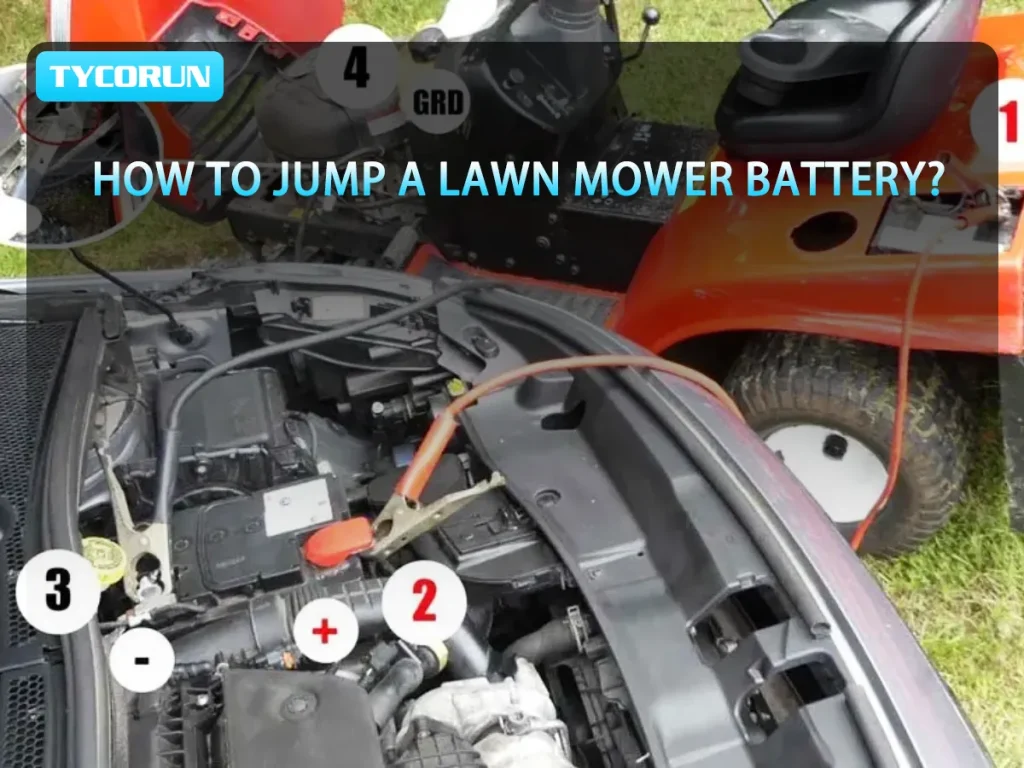
Locate the positive terminal on the lawn mower battery. It usually has a plus (+) sign or red cover. Connect one end of the red jumper cable to this terminal. Attach the other end of the red cable to the positive terminal of the car battery. Ensure both connections are secure and free from dirt or corrosion.
Connecting Negative Cables
Find the negative terminal on the car battery, marked with a minus (−) sign or black cover. Attach one end of the black jumper cable to this terminal. Instead of connecting the other end to the lawn mower battery, clip it to a metal part of the mower’s engine frame. This reduces the risk of sparks near the battery. Make sure the connection is tight and stable.
Starting The Car Engine
Start the car engine and let it run for a few minutes. This action charges the lawn mower battery gently. Avoid revving the engine or turning it off during this period. Keep the cables connected and check for any unusual noises or smells. This step prepares the lawn mower battery for a successful start.
Starting The Lawn Mower
After a few minutes of charging, try to start the lawn mower. If it doesn’t start immediately, wait a bit longer with the car engine running. Once the mower starts, keep it running to stabilize the battery charge. Carefully disconnect the jumper cables in reverse order: negative cable first, then positive. Store the cables safely for future use.
Post Jump Start Actions
Post Jump Start Actions Using a car to jump a lawn mower battery is possible. Ensure both vehicles are off before connecting jumper cables. Attach red clips to positive terminals and black clips to negative ones. Start the car, then the mower.
Disconnect cables carefully in reverse order.
After jump-starting a lawn mower battery with a car, several steps ensure safety and efficiency. These actions help maintain the lawn mower and extend the battery’s life. Let’s explore these critical post jump-start actions.Disconnecting Cables Safely
Turn off the car engine before disconnecting cables. This prevents electrical surges. Remove the black cable from the lawn mower first. Then, detach it from the car battery. Next, remove the red cable from the lawn mower. Finally, disconnect the red cable from the car. Ensure cables do not touch each other. Store them safely to avoid damage.Running The Lawn Mower
Start the lawn mower and let it run for 15 to 20 minutes. This helps recharge the battery slightly. It also ensures the mower’s engine functions smoothly. Listen for unusual noises or vibrations. Address any issues immediately. Running the mower allows the battery to stabilize.Charging The Battery Fully
Use a battery charger to charge the lawn mower battery fully. A complete charge extends battery life and ensures reliability. Follow the charger’s instructions carefully. Monitor the charging process to avoid overcharging. Once fully charged, disconnect the charger safely. A fully charged battery ensures the mower starts easily next time.Troubleshooting Tips
Jumping a lawn mower battery with a car can save you time, but it’s not always straightforward. Before you try, it helps to understand what might be causing the battery issues in the first place. Here are some troubleshooting tips that can guide you through common problems and help you decide if jump-starting is the right solution.
Battery Not Holding Charge
If your lawn mower battery won’t hold a charge, simply jump-starting it might be a temporary fix, not a permanent solution. Batteries lose their ability to store power over time, especially if they’ve been left unused for long periods or exposed to extreme temperatures.
Have you noticed your battery dying soon after charging? That’s a clear sign it might need replacement. Testing the battery with a multimeter can give you a precise reading of its voltage and help you decide if a jump-start will actually work.
Corroded Terminals
Corrosion on the battery terminals can block the flow of electricity and make jump-starting difficult or ineffective. Look for white, green, or bluish powdery buildup around the terminals. This corrosion can cause a weak connection, even if the battery itself is fine.
Cleaning the terminals is simple and often overlooked. Use a mixture of baking soda and water with a wire brush to scrub away corrosion. Dry the terminals thoroughly before reconnecting the cables. This small step can make a big difference in jump-start success.
Alternator Issues
Sometimes, the problem isn’t the battery but the alternator. If your lawn mower’s alternator isn’t charging the battery properly, the battery will keep dying no matter how many times you jump-start it.
Ask yourself: Does the battery lose power quickly after running the mower? That could signal alternator trouble. Testing or replacing the alternator might be necessary to keep your mower running smoothly and avoid repeated battery problems.
When Not To Jump Start
Jump starting a lawn mower battery with a car can save time and effort. Yet, knowing when not to jump start is very important. Some situations pose safety risks or may cause more damage. Avoid jump starting in these cases to protect yourself and your equipment.
Severely Damaged Battery
Do not jump start a battery with visible cracks or leaks. A damaged battery can leak acid or fail suddenly. This can harm you or your mower. Check the battery carefully before attempting a jump start. If the battery looks weak or broken, replace it instead.
Electrical System Problems
Jump starting may not work if the mower has electrical faults. Faulty wiring or a broken alternator can cause repeated battery failure. Using a car to jump start can worsen these problems. Get the mower’s electrical system checked by a professional first.
Risk Of Battery Explosion
Jump starting carries a risk of sparks near the battery. Sparks can ignite hydrogen gas from the battery, causing an explosion. This risk rises if the battery is old or overcharged. Avoid jump starting in closed spaces or near flammable materials.

Credit: www.tycorunenergy.com
Frequently Asked Questions
Can You Jump A Lawn Mower Battery With A Car?
Yes, you can jump a lawn mower battery with a car. Use jumper cables carefully, connecting positive to positive and negative to negative. Ensure the car engine is off initially, then start it briefly to transfer charge. Avoid running the car too long to prevent damage.
Is It Safe To Jump-start A Mower Battery From A Car?
Jump-starting a mower battery from a car is generally safe if done correctly. Use proper jumper cables and connect terminals carefully. Avoid sparks and never let cables touch. Always follow safety guidelines to prevent battery damage or personal injury.
How Long Should You Jump-start A Mower Battery?
Jump-start a mower battery for about 5 minutes. This time allows enough charge transfer to start the mower. Running longer might overcharge the battery or cause damage. After jump-starting, disconnect cables in reverse order and let the mower run to recharge fully.
What Precautions To Take When Jump-starting Mower Battery?
Wear protective gloves and eyewear before jump-starting. Connect positive terminals first, then negative to a grounded metal surface on the mower. Avoid sparks and keep cables away from moving parts. Ensure both batteries have similar voltage to prevent damage.
Conclusion
Jumping a lawn mower battery with a car can work in some cases. Always connect the cables carefully to avoid sparks or damage. Use the right steps to keep yourself safe. Remember, not all lawn mower batteries are the same.
Some may need a charger or replacement instead. Knowing how to jump start can save time and money. Still, check your mower’s manual for specific advice. Taking simple precautions helps protect both you and your equipment. A little caution goes a long way in battery care.